


Last Updated: 2 November 2026
Quick Summary
Natural wax candles tunnel because the first burn was too short, the wick is too small for the vessel, or a draught pulls heat to one side. Soy, beeswax and coconut wax each behave differently, so the fix depends on which wax you are burning. Burn until the melt pool touches the glass, then stop.
- A candle 8cm across usually needs around two hours on its first burn to reach the edge.
- A flame under roughly 1cm that never grows is a sign of an undersized wick.
- Light every wick on a multi-wick candle at once, or the unlit side will tunnel.
- In a burn test, record melt-pool width hourly, flame height and wax remaining.
- Parks Candles use a 100% natural soy and rapeseed blend, hand-poured in the UK.
Table of Contents
- What Candle Tunnelling Actually Is
- Why Natural Wax Candles Tunnel
- Candle First Burn Time: The Rule That Prevents Tunnelling
- Candle Wick Too Small Symptoms and What They Mean
- How to Prevent Candle Tunnelling
- How to Fix a Tunnelling Candle Safely
- Choosing a Natural Wax Candle That Burns Evenly
- Frequently Asked Questions
What Candle Tunnelling Actually Is
Candle tunnelling is what happens when a candle burns straight down its centre, leaving a ring of solid wax around the edge. The flame never melts the wax out to the sides of the vessel. Instead of a full melt pool, you get a narrow well.
The waste is the real problem. That unmelted ring is fragrance and burn time you have already paid for.
Tunnelling differs from other burn faults, and the distinction matters:
- Tunnelling: a deep centre well with a hard wax rim
- Uneven burn: one side melts faster, often from a draught
- Soot: black marks on the glass, usually from a long or untrimmed wick
Get the diagnosis right and the fix becomes obvious.
Why Natural Wax Candles Tunnel
Natural wax candles tunnel for three reasons: a first burn that was too short, a wick that is too small for the vessel, or a draught pulling heat to one side. Wax type plays a part, but it is rarely the whole story, and it is where most generic advice goes wrong, because not every natural wax tunnels for the same reason.
Natural waxes behave differently from paraffin, and the main natural wax families do not all respond to the same fix.
How the main natural waxes differ in melt behaviour
- Soy wax: lower melting point, slow to reach the edges in a wide vessel, and prone to a rough, pitted set. It usually needs a larger wick relative to vessel diameter than beeswax, and it rewards a generous first burn. Tunnelling here is most often a wick-to-diameter mismatch.
- Beeswax: higher melting point and a firmer set, so it holds a hard rim stubbornly once one forms. It tends to need a longer first burn and a wick sized up for the vessel; short burns create a rim that is very difficult to recover.
- Coconut wax: softer and lower-melting, so it reaches the edge more readily but can over-melt and drown the wick if the wick is oversized. Tunnelling is less common than wick drowning, which is easily mistaken for it.
- Rapeseed and blended waxes: a blend is formulated to balance melt point, scent throw and set. Tunnelling in a blend usually points to the wick series or fragrance load rather than the wax itself, because the maker has already tuned the wax.
Before you blame the wax, identify which wax you are burning, as the cause of tunnelling can differ between waxes.
The First-Burn Memory Ring
The first burn sets the candle's habits. Melt wax out to the edge once, and the candle tends to follow that boundary for the rest of its life. Stop short, and the hard rim hardens further each time, making the well deeper and the rim harder to melt.
Wick Size and Wax Type
Wick size must match vessel diameter, and it must also match the wax. For a deeper comparison, read natural wax vs paraffin candles. A wick too small for a wide jar cannot push heat to the edges, no matter how long you burn it.
Candle First Burn Time: The Rule That Prevents Tunnelling
Candle first burn time should be long enough to melt the wax edge to edge, and no longer. For most vessels that means two to three hours. A candle 8cm across usually needs around two hours. A wider 10cm vessel may need three.
The rule is simple: burn until the melt pool touches the glass, then stop. Do not guess by the clock alone. Watch the wax.
| Vessel diameter | Typical first burn | What to watch for |
|---|---|---|
| Up to 6cm | 1.5-2 hours | Pool reaches edge quickly |
| 7-8cm | 2-2.5 hours | Even ring all round |
| 9-10cm | 2.5-3 hours | No solid islands at edge |
| Multi-wick, 12cm+ | 3-4 hours | All wicks lit together |
Never leave a burning candle unattended, and keep it away from children, pets and anything flammable (Candle safety). The Fire Kills campaign guidance sets out the basics every household should follow.
Candle Wick Too Small Symptoms and What They Mean
Candle wick too small symptoms are easy to spot once you know them. The flame looks weak and short. The melt pool stays narrow. Wax climbs the wick or the flame drowns in its own pool. Sometimes the candle tunnels and then puts itself out.
Check these signs:
LIME, BASIL & MANDARIN 650G 3 WICK CANDLE →
- A flame under roughly 1cm that never grows
- A pool that stops short of the edge after two hours
- Wax pooling around the wick and extinguishing it
- A hard rim that gets thicker with every burn
If you see two or more, the wick is undersized for the vessel. No amount of extra burn time will fix it.
How to Prevent Candle Tunnelling
Prevention comes down to four habits, and none of them are complicated. For the full step-by-step, see how to prevent candle tunnelling. Trim the wick before every burn. Burn long enough to reach the edge. Keep the candle out of draughts. Let the wax reset fully between burns.
Here is how we would do it:
- Trim the wick each time, removing any mushroomed tip
- Light all wicks on a multi-wick candle at once
- Burn to the edge on the first light, then stop
- Move the candle away from windows, doors and vents
- Let it cool completely before relighting
Burn-time guidance by vessel diameter
What matters is reaching an edge-to-edge melt pool without over-burning the glass. As a starting point:
- Up to 6cm across: around 1.5-2 hours is usually enough to reach the edge. Watch for the pool touching the glass rather than timing it.
- 7-8cm across: plan for 2-2.5 hours. If the pool still has solid islands at the edge after that, the wick is likely undersized rather than the burn too short.
- 9-10cm across: 2.5-3 hours is typical. Wider vessels need more heat, and a single wick may never reach the edge, which is a wick choice problem, not a burn-time one.
- Multi-wick, 12cm and above: 3-4 hours with every wick lit. Never light only some of the wicks on a multi-wick candle; the unlit side will tunnel.
Stop as soon as the pool reaches the glass. Burning beyond that point adds heat to the vessel without improving the melt, and it risks overheating the glass and shortening the candle's life.
A maker's diagnostic sequence
If you make candles and a batch tunnels, work through these variables in order rather than assuming a short first burn is to blame:
- Wax blend, confirm the melt point and whether the blend is intended for the vessel size.
- Fragrance load, a high fragrance load can soften or harden the wax and change how the wick performs; check it against the wax supplier's guidance.
- Vessel diameter, measure the internal diameter at the top, not the base.
- Wick series and size, a wick that suits one wax will not suit another; test the series, not just the size.
- Wick testing, burn a test candle in the actual vessel, in still air, and record the melt pool.
What to measure in a burn test
A burn test is only useful if you record something. Note the melt-pool width at hourly intervals, the total burn time to reach the edge, flame height and stability, and how much wax remains at the end. A candle that reaches the edge in two hours with a steady flame is behaving; one that never reaches the edge after three hours points to the wick, not the burn.
How to Fix a Tunnelling Candle Safely
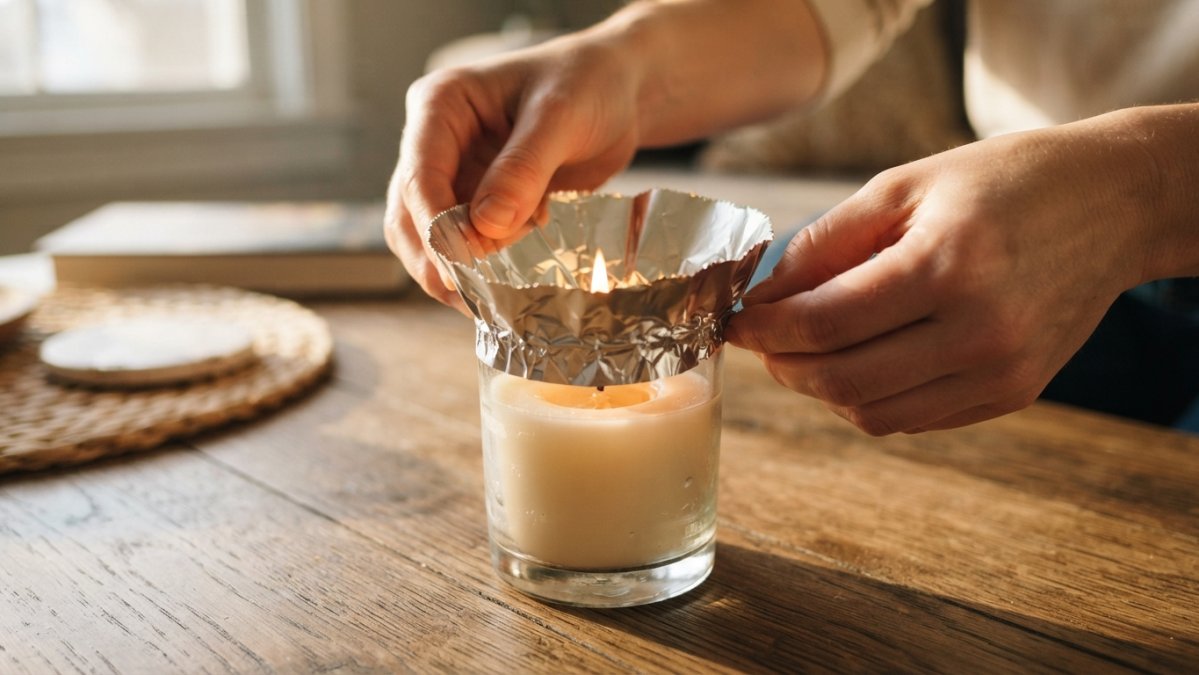
Once the surface is level, our guide on how to burn candles without soot will help you keep it that way.
Choosing a Natural Wax Candle That Burns Evenly
The best defence against tunnelling is a well-made candle. Look for wicks sized to the vessel, a wax blend built for even heat, and a maker who tests both together.
Our own approach is straightforward. Parks Candles are made with a 100% natural wax blend of soy and rapeseed, hand-poured in the UK, with coreless clean-burn technology. Our proprietary formulation, developed since 1989, is designed for a clean, even burn with a strong fragrance throw.
For larger rooms, a multi-wick format helps. The LIME, BASIL & MANDARIN 650G 3 WICK CANDLE at £89.00 uses three coreless clean-burn wicks and burns for up to 120-160 hours. If you prefer florals, the GRAPEFRUIT & JASMINE 650G CANDLE at £89.00 offers three coreless clean-burn wicks and up to 120 hours of burn time.


Frequently Asked Questions
Why do natural wax candles tunnel?
Natural waxes can need a properly sized wick to melt to the edge. Tunnelling usually comes from a first burn that was too short, an undersized wick, or a draught pulling heat away from one side. A candle burned for less than two hours per 2.5cm of diameter sets a narrow memory ring that later burns cannot widen.
How long should you burn a candle the first time to prevent tunnelling?
Burn until the wax melts to the edge of the vessel, then stop, and let the wax cool completely before relighting. Getting the first burn edge-to-edge helps prevent candle tunnelling.
Can you fix a candle that has burned a hole down the middle?
Often yes, if the tunnel is shallow. Trim the wick to 5mm, then wrap foil around the rim of the vessel with a small opening at the top to trap heat and encourage the wax to melt outward. Burn in two-hour sessions and check progress. If the wick is drowned in a deep pool or the tunnel is more than 1cm deep, the wick is too small and the candle is unlikely to recover.
Does wick size cause candle tunnelling?
Wick size is the most common cause. A wick too small cannot generate enough heat to melt wax to the vessel edge, so the flame channels down the centre. Symptoms include a weak flame, wax left on the sides and the wick drowning in its own pool.
Tunnelling is a burn problem, not a wax problem, and it is almost always preventable. If you would rather start with a candle built to burn evenly from the first light, explore the Parks Candles range. Our 100% natural soy and rapeseed blend, coreless clean-burn wicks and hand-poured UK craftsmanship are designed for exactly that. Get started with Parks Candles and shop the range today.
