

Last Updated: November 8, 2026
Quick Summary
Cotton wick candles burn cleaner because the wick is a braided cord of 100% cotton fibres with no metal core or synthetic additives, so the flame releases little beyond heat, light and water vapour. A well-sized cotton wick also gives a steady flame, an even melt pool and far less soot.
- Cotton wicks are lead-free and all-natural, so they burn without releasing metal particles into the room.
- A steady cotton flame warms the wax evenly, protecting both cold throw and hot throw.
- Trim a cotton wick to roughly 5mm before every burn, never while the candle is lit.
- Avoid trimming under 3mm, or the wick drowns and the candle tunnels.
- Cotton struggles in very wide containers, where a single wick cannot heat the full surface.
Table of Contents
- Why Cotton Wick Candles Burn Cleaner and Last Longer
- How Cotton Wicks Affect Scent Throw and Fragrance Performance
- Cotton Wick vs Wood Wick Candles: Which Suits Your Home
- How to Trim a Candle Wick for a Cleaner, Longer Burn
- How Long to Burn a Candle at a Time
- How to Prevent Candle Tunnelling and Keep the Melt Pool Even
- Where Cotton Wicks Fall Short: A Balanced View
- Choosing a Cotton Wick Candle from the Parks Candles Range
- Frequently Asked Questions
Why Cotton Wick Candles Burn Cleaner and Last Longer
The benefits of cotton wick candles start with the simplest fact in candle making: cotton is a clean-burning material. A cotton wick is a braided cord of 100% cotton fibres that draws melted wax up to the flame, where it burns away. Because the wick itself contains no metal core and no synthetic additives, the flame has little to throw off beyond heat, light and water vapour.
At Parks Candles, we hand-pour our candles with cotton wicks, and the difference shows in daily use. A good wick does not just light; it controls everything from flame height to how evenly the wax melts.
Lead-Free, All-Natural Wick Materials
Older candle wicks sometimes hid a metal core inside the cotton, and that core could contain lead. Modern cotton wicks are typically simply braided cotton, sometimes with a thin paper or cotton thread for stiffness.
That matters for indoor air. A lead-free, all-natural wick burns without releasing metal particles into the room. When you see the words "100% cotton" on a candle, that is the claim to look for.
Steady Flame, Even Burn and Less Soot
Cotton gives a steady flame because the braid controls how much wax reaches the fire. The wick curls slightly as it burns, which keeps the flame at a sensible height instead of flaring.
Less flare means less soot. Soot and smoke appear when a flame is starved of air or overloaded with wax, and a well-sized cotton wick avoids both. The result is an even burn, a calm flame and far less blackening on glass or walls. For a full walkthrough on keeping glass clean, see our guide on how to burn candles without soot.
How Cotton Wicks Affect Scent Throw and Fragrance Performance
Scent throw depends on heat, and heat depends on the wick. A cotton wick delivers a consistent flame that warms the wax at a steady rate, releasing fragrance oil evenly across the melt pool.
That steady release produces two things scent lovers notice. Cold throw is the scent you smell before lighting, and hot throw is the scent released while burning. A steady flame helps protect both.
Matching Wick Size to Wax, Fragrance Load and Vessel
Wick sizing matters as much as wick material, and it is where most home candlemakers go wrong. A wick that is too small under-heats the wax and the scent stays locked in. One that is too large overheats it, and the fragrance burns off too fast.
Wick sizing depends on the wax, the fragrance load and the container diameter, so the right wick for one combination may not suit another. Test each combination before relying on it.
These are starting points, not rules. Every wax, fragrance and vessel combination needs its own burn test, because the same wick can perform differently in a 200ml tin and a 300ml glass jar. If you change wax supplier, fragrance or jar size, re-test rather than assuming the old wick will cope.
Watch out: sizing a wick by diameter alone and skipping the test burn is the most common cause of tunnelling, soot and weak hot throw, the wick may look right and still be wrong for that specific blend.
Cotton Wick vs Wood Wick Candles: Which Suits Your Home
Cotton wick vs wood wick candles comes down to how you like to burn. Cotton is the reliable everyday choice; wood is the experience-led choice.
- Cotton wicks: steady flame, easy to trim, low soot, dependable scent release, works in almost any container
- Wood wicks: soft crackle, wider flame, a cosy focal point, but fussier to light and quick to fail if the wick is short or damp
- Hemp and bamboo wicks: natural options, though they can burn hotter and need careful sizing
- Best for quiet rooms and daily routines: cotton
- Best for atmosphere and occasional burning: wood
If burn duration is your deciding factor, our comparison of luxury candles with the longest burn time covers how different wick types perform over a full burn.
Here is how the main wick types compare for everyday burning.
| Wick type | Key traits | Best for |
|---|---|---|
| Cotton | Steady flame, easy to trim, low soot, dependable scent release | Quiet rooms and daily routines |
| Wood | Soft crackle, wider flame, cosy focal point, fussier to light | Atmosphere and occasional burning |
| Hemp and bamboo | Natural options, can burn hotter, need careful sizing | Not stated in the article |
How to Trim a Candle Wick for a Cleaner, Longer Burn
Trim a cotton wick before every burn, and never trim it while the candle is lit. A short wick generally gives a smaller, cleaner flame.
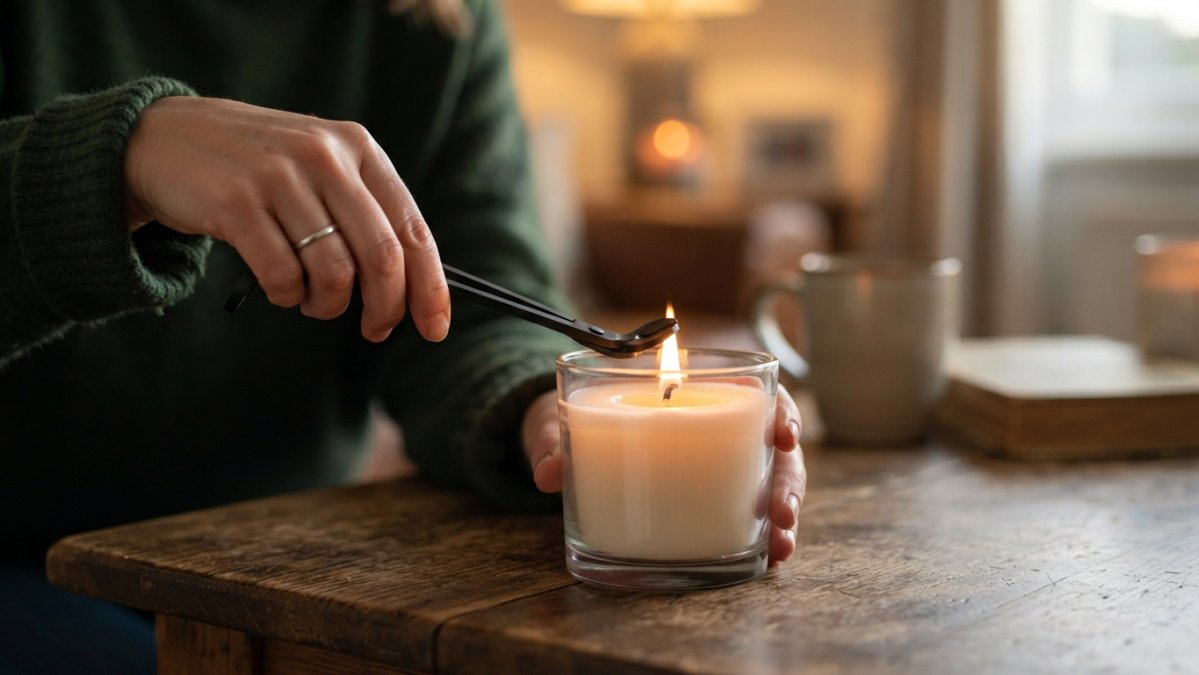
The woman is British.
Here is how we recommend doing it:
- Let the candle cool completely first.
- Snip the wick to roughly 5mm with wick trimmers or sharp scissors.
- Remove any mushrooming, the rounded black tip that forms after long burns.
- Straighten the wick so it stands upright in the centre.
- Check the wax surface for old trimmings before lighting.
A common mistake is trimming too short. Under 3mm and the flame struggles to draw wax, so the wick drowns and the candle tunnels.
How Long to Burn a Candle at a Time
Burn a candle in moderate sessions rather than for extended periods, as overheating can shorten its life.
The first burn sets the pattern for the candle's life, so give it enough time for the wax to melt edge to edge. After that, keep sessions moderate.
Watch out: very long burns can overheat the container and shorten the wick's life.
A Simple Burn-Test Log You Can Repeat
Rather than guessing whether a candle is burning well, keep a short log for the first three burns of any new candle. Note the following at 30-minute intervals:
- Flame height: a steady flame roughly 2-3cm tall is a good sign. A flame that consistently exceeds 4cm or flickers wildly suggests the wick is too large or the candle is in a draught.
- Melt pool: measure how far the melted wax reaches across the surface. On the first burn it should reach the edge within the expected time (about one hour per 2.5cm of diameter). A pool that stalls short points to an undersized wick.
- Soot: check the glass and the wax surface for black specks or a grey film. Light sooting late in a long burn is normal; heavy soot within the first hour points to poor wick sizing or a draught.
- Burn duration: record how long the candle lasts against the maker's estimate. A candle that burns much faster than expected is usually over-wicked.
A common pattern is that the first burn looks fine and problems appear on the second or third light, once the wick has mushroomed or the melt pool has deepened. Logging each burn makes those changes visible instead of guesswork. If the flame grows, the pool stalls or soot appears, extinguish the candle, let it cool, trim the wick to 5mm and try again before assuming the candle is faulty.
How to Prevent Candle Tunnelling and Keep the Melt Pool Even
Tunnelling happens when the melt pool never reaches the edge of the container, leaving a ring of wasted wax. Cotton wicks prevent it far better than most alternatives, provided you size and trim them correctly.
Three habits keep the melt pool even:
- Burn long enough on the first light to reach the edge
- Trim to 5mm before each burn
- Keep the candle away from draughts and radiators
If you are already dealing with a tunnel, our step-by-step guide on how to prevent candle tunnelling shows how to rescue the wax. For the underlying cause in natural wax, read why natural wax candles tunnel.
Where Cotton Wicks Fall Short: A Balanced View
Cotton is not perfect, and honesty matters here. A cotton wick needs trimming before every burn, which wood wicks and some treated wicks tolerate less strictly. Cotton also struggles in very wide containers, where a single wick cannot heat the full surface.
Cotton can mushroom if left untrimmed, and it gives no crackle or visual drama. If you want a focal flame, wood wins. If you want a clean burn, even melt and steady scent, cotton is the better tool.
Choosing a Cotton Wick Candle from the Parks Candles Range
Choosing well means checking three things: wick material, wax blend and container size. Our candles use a 100% natural wax blend with cotton wicks, hand-poured in the UK, for a clean, even burn and a strong fragrance throw.
- 100% cotton, lead-free wicks for a steady flame and low soot
- Natural wax blend for an even melt pool and consistent hot throw
- Hand-poured in the UK for reliable performance in every jar
You can shop the Parks Candles range to find the size and scent that suits your room.
Choosing a candle that burns cleanly, smells properly and lasts is harder than it should be. Parks Candles makes that choice simpler with a 100% natural wax blend, cotton wicks and hand-poured British craftsmanship. Explore the collection and bring a cleaner, longer-lasting scent into your home.
Frequently Asked Questions
Do cotton wick candles burn cleaner than wood wick candles?
Cotton and wood wicks behave differently in use, and the right choice depends on the atmosphere you want. Neither material is soot-free if the wick is too long or the candle is left in a draught, so routine trimming matters more than the wick material alone.
Why is my cotton wick candle tunnelling?
Tunnelling usually means the first burn was too short, so the melt pool never reached the edge of the container. Burn the candle long enough for the melt pool to reach the edge, keep the wick trimmed, and avoid lighting it in a draught.
How long should you burn a cotton wick candle at a time?
Aim for a session long enough for the melt pool to reach the edge, and avoid very long burns, as these can overheat the glass. Let the candle cool fully before trimming and relighting so the wax resets evenly.
Do cotton wicks affect a candle's scent throw?
Yes. Wick size, wax type and container diameter all influence how the fragrance is released, so a balanced combination helps give an even scent throw.
