


Last Updated: October 23, 2026
Quick Summary
Scent throw is the distance and intensity with which a lit candle disperses fragrance into a room, and it depends on matching wax weight to your space. A 180g-290g single-wick candle suits small rooms, 290g-350g with two to three wicks suits medium rooms, and 650g and above with three wicks suits open-plan spaces.
- Cold throw is the fragrance released unlit, while hot throw is released once the wax pool has melted.
- Trim the wick to 5mm before every burn to keep the flame steady and fragrance dispersing.
- Burn for two to four hours at a time and let the wax pool reach the edge on the first burn.
- Your nose stops registering a familiar fragrance after 20 to 30 minutes, so leave the room and return.
- Our soy and rapeseed wax blend with coreless clean-burn wicks carries fragrance without muting it.
Table of Contents
- What Scent Throw Actually Means in a Luxury Candle
- Cold Throw vs Hot Throw: Why a Candle Smells Different Unlit
- Candle Fragrance Throw by Room Size: Matching Wax Weight to Space
- Why Is My Candle Not Smelling Strong? The Usual Culprits
- How to Improve Candle Scent Throw Without Buying New Wax
- How Wax, Wicks and Fragrance Load Decide Scent Throw
- Frequently Asked Questions
What Scent Throw Actually Means in a Luxury Candle
Scent throw is the distance and intensity with which a lit candle disperses fragrance into a room. It is the single measure that separates a candle worth £89 from one worth £9, and it has nothing to do with how the wax smells in the jar.
At Parks Candles, we have been hand-pouring in our workshop since 1989, and in that time the most common complaint we hear about premium candles bought elsewhere is simple: it smelled wonderful in the shop, then vanished once lit. That gap between promise and performance is a scent throw problem, not a fragrance problem.
Industry reporting suggests the appetite for premium candles is climbing faster than the wider category, with Ringly's analysis of Grand View Research data citing a 10.8% compound annual growth rate for the luxury segment. More money is chasing better candles. Yet the word "luxury" carries no regulatory definition in this category, which Homecourt's buyer's guide notes plainly: any brand can print it on a lid. Quality varies enormously behind the label.
So judge a candle by what it does in the air, not what it promises on the glass. Below, we explain exactly how scent throw works, why room size changes everything, and the practical fixes when your candle underperforms.
Cold Throw vs Hot Throw: Why a Candle Smells Different Unlit
Cold throw is the fragrance a candle releases while unlit; hot throw is the fragrance released once the wax pool has melted. A candle can excel at one and fail at the other, and that distinction explains most buyer disappointment.
Cold throw comes from fragrance oils sitting near the wax surface, which is why an unlit candle in a shop smells so inviting. Hot throw depends on the wax melting evenly, the wick drawing fragrance up into the flame zone, and the room's air movement carrying it outward. A strong cold throw with a weak hot throw usually signals a wax blend or wick that cannot handle its own fragrance load.
When you assess a candle before buying, smell it cold, then ask what the hot throw is like in a room of your size. Our own Vintage Aromatherapy range, including the Grapefruit & Jasmine 350g candle, is built around sustained hot throw rather than a showroom flourish.

Candle Fragrance Throw by Room Size: Matching Wax Weight to Space
Room size dictates the wax weight you need, and most underwhelming candles are simply too small for the space they are lit in. A 180g single-wick candle cannot credibly fill an open-plan living area, no matter how good the fragrance is.
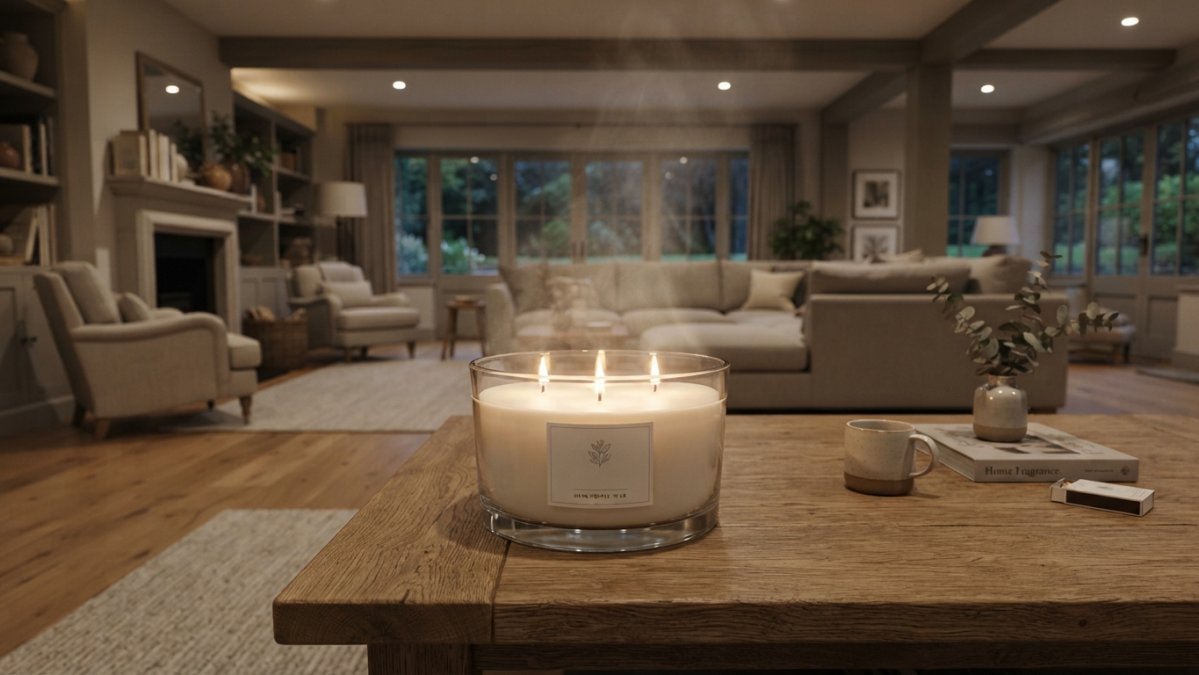
As a working rule, match candle size to room:
| Room Type | Approximate Space | Recommended Wax Weight | Wick Count |
|---|---|---|---|
| Bedroom, bathroom, study | Small, enclosed | 180g-290g | Single wick |
| Standard living room, dining room | Medium | 290g-350g | Two to three wicks |
| Open-plan living, large entertaining space | Large | 650g and above | Three wicks |
Three-wick designs matter here because they melt a wider wax pool faster, releasing more fragrance across a bigger footprint. Our Grapefruit & Jasmine 650g three-wick candle exists for precisely this reason: large rooms, open-plan areas, and longer burn sessions where consistent diffusion counts.

Why Is My Candle Not Smelling Strong? The Usual Culprits
The most common cause of a weak-smelling candle is an unmanaged burn: a wick left too long, a burn session too short, or a room with too much air movement. Fragrance performance is a technique problem more often than a product problem.
Work through these culprits in order:
- Untrimmed wick. A wick longer than 5mm creates a large, smoky flame that burns fragrance off too quickly instead of dispersing it.
- Short burn sessions. If the first burn does not melt wax to the edge of the vessel, the candle tunnels and never reaches full throw.
- Draughts. Open windows, extractor fans and air conditioning pull fragrance away before it settles.
- Cold rooms. Wax and fragrance oils release more slowly in low temperatures.
- Oversized rooms. A candle rated for a bedroom will always struggle in a hall.
- Scent fatigue. Your nose stops registering a familiar fragrance after 20 to 30 minutes, which is not the same as the candle failing.
That last point catches out more people than any other. If you cannot smell your candle after half an hour, leave the room for ten minutes and return. Most candles are working perfectly; the nose has simply adjusted.
GRAPEFRUIT & JASMINE 650G CANDLE →
How to Improve Candle Scent Throw Without Buying New Wax
You can improve candle scent throw with technique alone, before spending another penny on wax. Wick trimming, burn duration and placement do more for fragrance diffusion than most upgrades.
Follow this routine:
- Trim the wick to 5mm before every burn. Use proper wick trimmers or sharp scissors, and never leave trimmings in the wax.
- Burn for two to four hours at a time. Long enough to melt the full surface, short enough to avoid overheating the vessel.
- Let the wax pool reach the edge on the first burn. This sets the candle's memory and prevents tunnelling for its whole life.
- Position the candle at seated height in the centre of the room. Fragrance rises and spreads from the middle outward.
- Close doors and windows during the burn. Still air holds fragrance; moving air steals it.
- Use a candle snuffer rather than blowing out. Blowing sends a puff of soot and burnt wick across the room.
- Rotate fragrances. Switching scents every few days resets your nose and restores the impact.
If a candle still underperforms after all of that, the wax or wick is the limitation, not your technique. That is the point at which the product itself deserves scrutiny.
How Wax, Wicks and Fragrance Load Decide Scent Throw
Wax chemistry, wick design and fragrance load determine scent throw before the candle ever reaches your home. A natural wax blend formulated to carry a high fragrance load, paired with clean-burning wicks, will outperform a cheaper paraffin candle of identical size.
Our proprietary blend of soy and rapeseed wax, developed in-house over decades, is chosen for exactly this: it holds fragrance well, burns evenly, and produces minimal soot. Coreless clean-burn wicks keep the flame steady so fragrance disperses consistently rather than in smoky bursts. That combination is why a smaller Parks candle can outperform a larger competitor.
Scent trends also reward this approach. Candle Delirium's 2026 luxury candle report found leather, tobacco, smoke and suede scent families accounted for two of its six best-selling candles, including its number-one seller. Rich, deep fragrances like these demand a wax that carries them without muting their complexity. Our Pomegranate Noir 290g candle applies the same principle to warm, woody, musky accords, with up to 62 hours of burn time.

What most guides miss is that fragrance load has a ceiling. Push too much oil into a wax that cannot hold it, and the candle sweats, burns poorly and throws less, not more. Restraint is a performance decision.
Getting luxury scent throw right comes down to matching wax weight to your room, trimming the wick, and choosing a candle whose wax blend is built to carry fragrance rather than merely smell good in the jar. That is the problem Parks Candles was founded to solve in 1989, and it remains the standard we hold every pour to: a 100% natural soy and rapeseed wax blend, hand-poured in our workshop, with coreless clean-burn wicks and recyclable packaging. If your current candles keep disappointing you, shop the range and light one in the room where it actually matters.
Frequently Asked Questions
What does scent throw mean in a candle?
Scent throw is how far and how strongly a candle releases fragrance into a room. It splits into two measures: cold throw, the scent you notice before lighting, and hot throw, the fragrance released while the wax melts. A candle with strong cold throw can still disappoint once lit if the wax, wick and fragrance load are not balanced. When judging scent throw, always assess the hot throw in the room where you plan to burn it, since temperature and air movement change how far the fragrance travels.
What is the difference between cold throw and hot throw?
Cold throw is the fragrance released at room temperature from an unlit candle; hot throw is released once the wax pool forms and the wick is burning. Cold throw tells you how the candle smells in the jar, which matters for gifting and shelf appeal. Hot throw tells you how it performs in your home. Some fragrances, particularly heavy woods, resins and musks, have modest cold throw but open up considerably when warmed. Others smell vivid unlit and fade once lit. Compare both before you commit to a full-size candle.
Why is my candle not smelling strong?
The most common causes are an oversized room for the wax weight, a wick trimmed too short or drowned in a deep wax pool, and burning for under an hour so no full melt pool forms. Draughts from windows, extractor fans and open doors carry fragrance away before it settles. Candle fatigue also plays a part: your nose stops registering a scent after prolonged exposure. Extinguish the candle, leave the room for 20 minutes and return, and the fragrance will usually read normally again.
How do I choose a candle for a large room?
Match wax weight to floor area. A 180g single-wick candle suits bedrooms and bathrooms of roughly 10 to 15 square metres. A 290g to 350g candle handles living rooms and dining spaces of around 20 to 30 square metres. For open-plan areas above 30 square metres, choose a three-wick candle of 650g or more, such as the Grapefruit & Jasmine 650g candle at £89, which is built for large living spaces and open-plan areas with up to 120 hours of burn time.
How long does it take for a candle to fill a room with fragrance?
Allow 30 to 60 minutes for a full melt pool to form and fragrance to circulate. Small rooms with a 180g candle typically scent within half an hour; large open-plan spaces with a 650g three-wick candle can take an hour or more to reach full throw. The first burn matters most: keep the candle lit for two to three hours so the wax melts edge to edge, which sets up consistent throw for every burn that follows.
Does trimming the wick improve scent throw?
Yes, when done correctly. A wick trimmed to about 5mm before each burn gives a controlled flame that melts the wax evenly and releases fragrance steadily. An overlong wick creates a large, sooty flame that burns fragrance oils off too quickly and can leave black marks on glass and walls. A wick trimmed too short struggles to stay alight and produces a weak melt pool, which is a frequent reason a candle stops smelling strong partway through its life.
